
CNC Machining: The Driving Force Behind the Electric Vehicle Revolution
As the global transition toward sustainable energy accelerates, the electric vehicle (EV) industry is experiencing unprecedented, explosive growth. However, behind this comprehensive transformation in mobility lies a crucial modern manufacturing technology: CNC Machining. High-precision CNC machining is deeply involved in and actively shaping the future of next-generation EVs. It is not only the foundation for achieving high vehicle performance but also the core driving force propelling EVs toward scalability, lightweighting, and intelligent manufacturing.
How is CNC Machining Reshaping Electric Vehicles Across Multiple Dimensions?
The impact of CNC machining on the EV industry is comprehensive, primarily reflected in the following three key areas:
1. High-Precision Manufacturing of Core EV Systems Unlike traditional internal combustion engine vehicles, the power core of an EV lies in its battery, motor, and electronic control systems. These components require extremely high precision. For instance, the drive motor housing demands exceptional concentricity and surface finish to guarantee operational efficiency and reduce noise. Meanwhile, complex battery trays and liquid cooling system components require stringent sealing and dimensional tolerances to ensure the safe operation of the thermal management system. CNC machines can perform the cutting of these complex geometries with micron-level precision, perfectly aligning with the pursuit of absolute reliability in next-generation EVs.
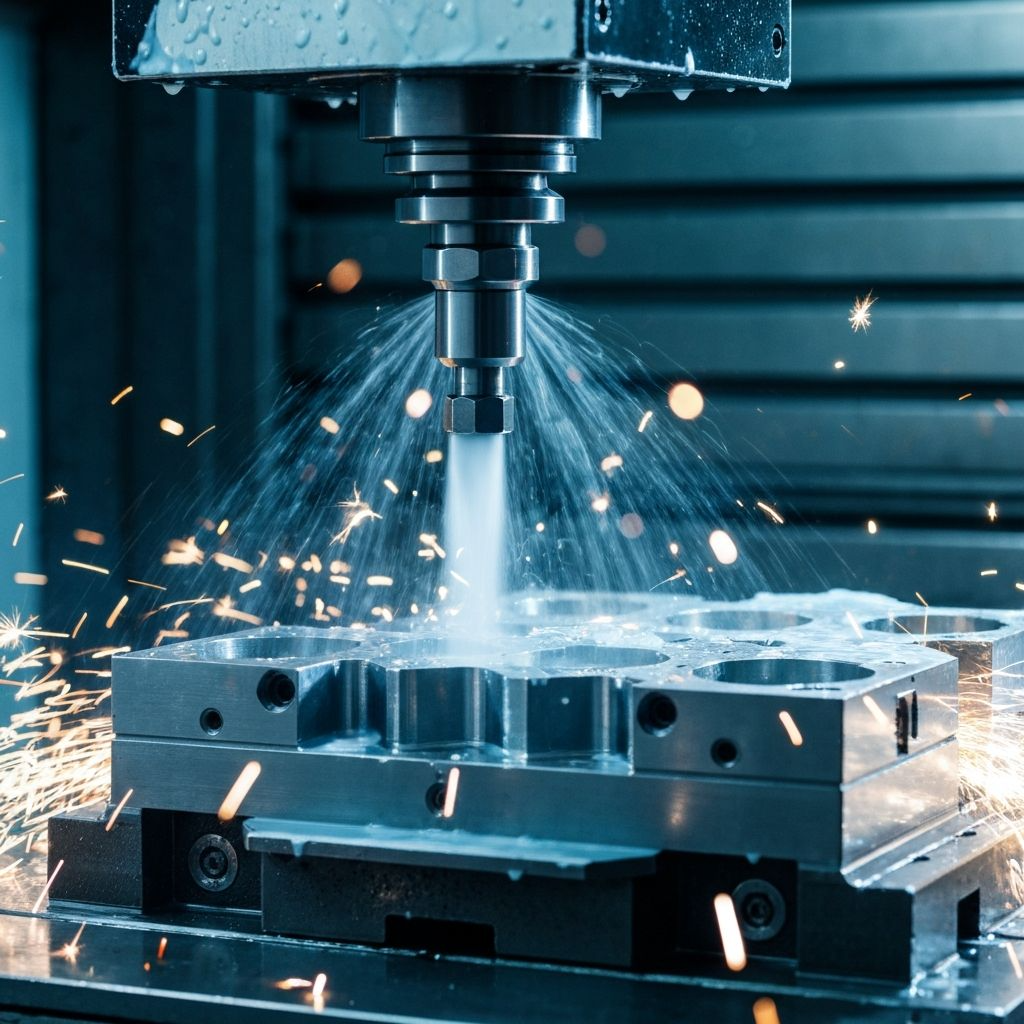
2. Overcoming the Challenges of Machining Lightweight Materials "Range anxiety" remains one of the primary challenges facing EVs, and "lightweighting" is the most effective approach to mitigating this issue. To reduce vehicle weight, manufacturers are extensively incorporating lightweight, high-strength materials such as aluminum alloys, magnesium alloys, and even titanium alloys. While these materials can significantly enhance driving range, they often present machining difficulties, such as susceptibility to deformation or rapid tool wear. Advanced CNC machining technologies, combined with 5-axis simultaneous machining, high-speed cutting, and highly efficient cooling systems (such as high-pressure coolant injection), can perfectly overcome these machining bottlenecks, achieving an optimal balance between part weight reduction and structural integrity.
3. Enabling Efficient and Highly Consistent Mass Production Faced with increasingly massive market demand, EV production must balance both speed and quality. Modern CNC machining centers are no longer isolated pieces of equipment; they are being deeply integrated with automated robotic arms, IoT sensors, and flexible production lines. This highly automated CNC machining paradigm not only drastically shortens the R&D cycles for new models and the manufacturing time of components but also ensures extreme consistency in the quality of millions of parts under mass production conditions, thereby effectively controlling EV manufacturing costs.
In summary, precision CNC machining technology is not merely the cornerstone of modern manufacturing; it is the crucial engine driving the EV industry to break through technical bottlenecks and achieve exponential growth. From the precision manufacturing of core electrical components to the masterful handling of cutting-edge lightweight materials and the construction of efficient automated production lines, CNC machining plays an irreplaceable role at every stage. Looking ahead, with the continuous refinement of cutting processes and the deepening development of smart manufacturing, CNC machining will undoubtedly continue to deeply shape the form and performance of electric vehicles, safeguarding and guiding us toward a greener, more efficient next generation of mobility.