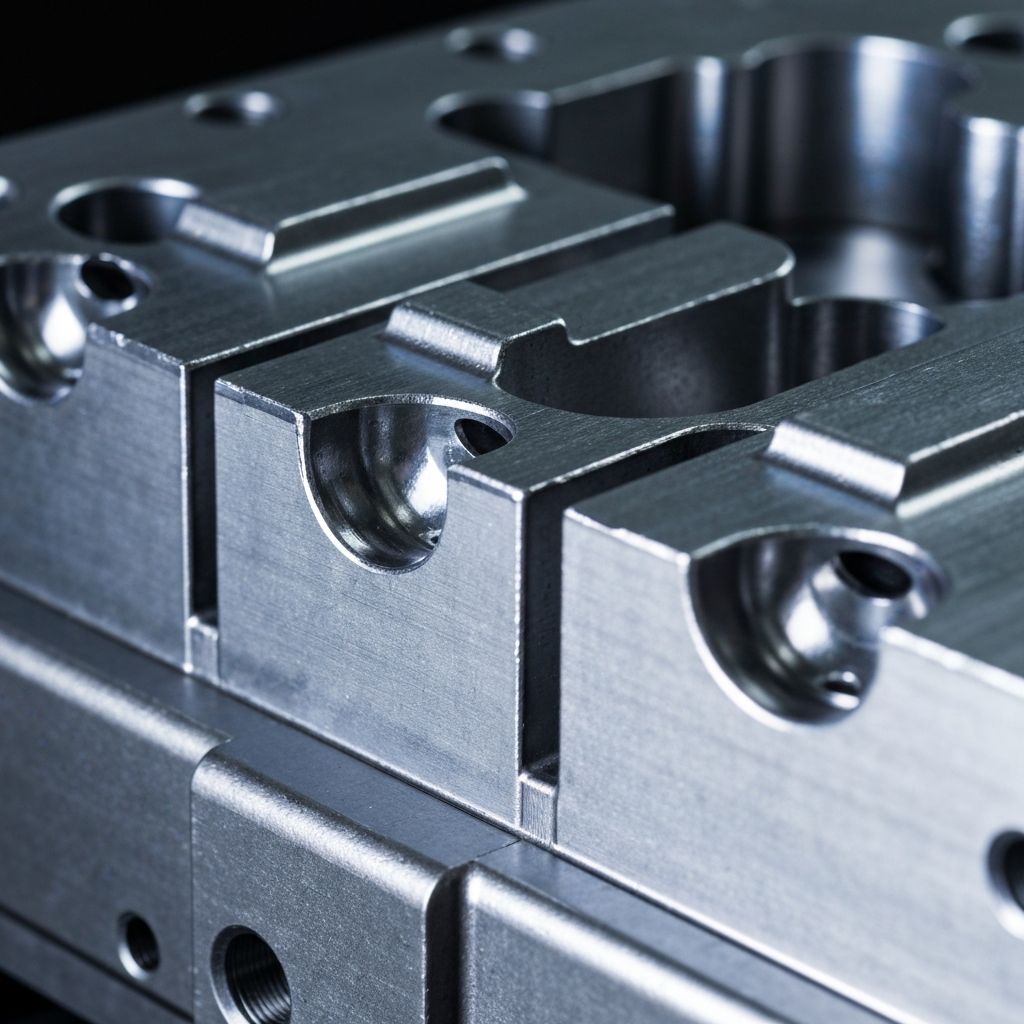
P20
1.2311, 1.2312
Pre-hardened plastic mold steel with strong cost-performance for medium-volume tooling.
Strengths
Typical parts
- Mold cores
- Cavities
- General plastic molds
- Medium-volume tooling

Material list
Final selection depends on geometry, tolerances, cosmetic requirements, operating environment, volume, and lead-time targets.
1.2311, 1.2312
Pre-hardened plastic mold steel with strong cost-performance for medium-volume tooling.
1.2738
Stable pre-hardened mold steel for larger molds and cosmetic components.
High-polish pre-hardened steel for transparent parts and cosmetic mold surfaces.
1.2083, 420 stainless
Stainless mold steel for corrosion resistance, transparent materials, and high-polish tooling.
1.2344, SKD61
Hot-work tool steel for die casting dies, hot runner parts, sliders, and high-temperature inserts.
BeCu
High-conductivity alloy used for cooling inserts and hot-spot control in mold tooling.
Tooling route
P20, 718H, NAK80, S136, H13, BeCu, aluminum
Use P20 or 718H for general parts, S136 for corrosive or transparent resins, and NAK80 for high-polish cosmetic parts.
H13, 1.2344, SKD61, 8407, copper alloys
Prioritize hot-work steels for thermal fatigue resistance, heat checking resistance, and high-temperature strength.
D2, SKD11, DC53, Cr12MoV, carbide, H13
Use high-hardness and wear-resistant materials for cutting edges and forming surfaces.
6061, 7075 aluminum, P20, S50C
Choose aluminum or simplified steel tooling when the goal is fast validation, pilot production, or low-volume molding.